
Showing posts with label 3.2 Business Growth. Show all posts

Friday, 2 June 2017

Business Growth


Starbucks stores:
Why do businesses like to grow?

1. Higher revenue / profitability.

2. The business will have an increased market share and brand recognition.

3. Economies of Scale:

Unit costs are likely to be lower as a business grows.


Internal economies of scale are the benefits of growth that arise within the firm.

Purchasing and marketing economies:

Large firms can get better rates when buying raw materials or components.


How much will Starbucks pay for each cup they use?

Purchasing Economies: where does your local convenience store buy stock?


Marketing economies: 

These arise from spreading the fixed cost of promotion over a larger level of output.


Technical economies:

As the scale of operations rises so the business can operate more efficiently.

Larger factories.

Flow production.

More efficient machines.

Robotics.


Specialisation and managerial economies:

As the firm grows it can afford to employ specialist managers.

Financial economies:

Larger firms find it easier to raise finance at competitive rates.

They may have large assets they can use for security.

They may be able to issue new shares.

Risk bearing economies:

Larger firms may diversify into different operations. 

Larger firms may benefit from spending on R&D.

External economies of scale:

The reductions in cost as an industry grows.

Labour economies:

A skilled workforce may develop where an industry is concentrated:

Silicon Valley in California -


Silicon Roundabout in London -


Training costs may be reduced if staff are hired from similar businesses.

Local education providers may offer specialist courses.

Ancilliary and commercial services economies:


Specialist banking, insurance, marketing and distribution services may be available

Co-operation economies:


Firms may agree to share the cost of R&D.


4. Increased market power over customers and suppliers.

How might the proposed merger between Sainsburys and Asda have increased market power?


Choosing the optimal mix of resources:

Capital versus labour intensive industries.


Increased market power.

As businesses get bigger they get more dominant.

Customers may suffer if a dominant business is able to charge higher prices and competition is limited.

Also customers may suffer as there is little need for innovation in this market.

Suppliers may suffer if they are reliant on certain customers for very large orders.

Why are these farmers angry?


Click on the picture:


Increased market share and brand recognition.

As the brand becomes stronger, a business may be able to:

Click on the picture:


Charge higher prices.

Differentiate the product from those of rivals.

Create customer loyalty.

Enhance product recognition.

Launch new products more easily. See here.

Increased profitability:

Larger businesses tend to make higher profits than smaller ones.

Problems arising with growth.

1. Diseconomies of Scale:

Average cost per unit rises as output increases.

Internal diseconomies of scale.

Communication problems


As the business expands communicating between different departments and along the chain of command becomes more difficult.
Distorted messages.
A lack of clear instructions.
Wider spans of control.

More reliance on written communication rather than face to face feedback.
Click on the picture

http://www.bbc.co.uk/news/business-27512405

Co-ordination problems

Parts of the organisation not working together to achieve corporate objectives.

Nice link here.

External diseconomies of scale.

These may occur from overcrowding in particular geographical areas.

The price of property, labour and services can rise.

Nice link here.

Evidence of diseconomies of scale at Tesco?


2. Overtrading:


Overtrading occurs when a business tries to fund a large volume of new business without sufficient resources.

As a result it runs out of cash.

Possible reasons:

A business starts with insufficient capital.

A business offers too much trade credit to customers.

A business has very slim profit margins.

How to reduce the risk of overtrading?

Ensure appropriate payment terms are agreed with customers and suppliers.


Debt factoring, to reduce the risk of bad debt. 


Offer discounts for prompt payment.

Complete a cash flow forecast to help plan for periods of negative cash flow.


Arrange external sources of finance to support a negative cash flow balance like an overdraft or loan.


The link between Tie Rack and Zone 1:


Thursday, 1 June 2017

Mergers and Takeovers


Mergers and takeovers occur when firms join together and operate as one organisation.


Mergers are usually conducted with the agreement of both businesses. Usually friendly.

A takeover, sometimes called an acquisition, occurs when one business buys another. Often hostile.

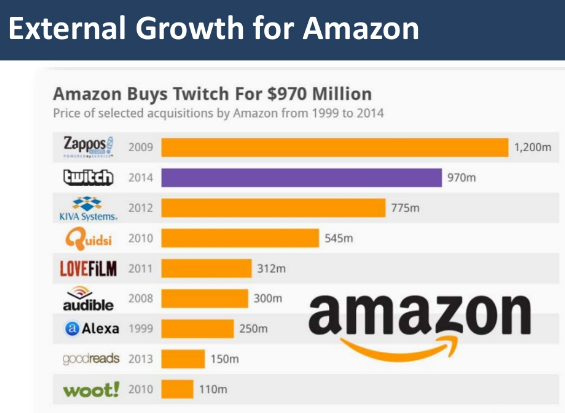
Sometimes called 'external growth'.


Why?


1. Synergies: "the whole is greater than the sum of the parts"

Cost synergies:
Perceived benefits from cost savings.

Revenue synergies:
Increased market share and a larger customer base.

2. Economies of scale from larger scale operations.

3. "Asset stripping"

4. The reduction in risk through diversification - Coca Cola takes over Innocent.

Click on the picture.


5. Eliminating competition.

6. A fast way to expand the business.

In 2015 O2 was taken over by Three.
It was reported that the cost of the takeover would be £10,500,000.000.


September 2017.

Google buys part of HTC mobile R&D division for a billion dollars.


Horizontal and vertical integration:


Horizontal integration.

When two firms in exactly the same type of business and at the same stage of production join together.


  • Dec 2015: Domino's buys largest German pizza chain in $86m deal.
  • 2015: Horizontal mergers in the betting industry: Ladbrokes and Gala Coral, Betfair and Paddy Power.

Benefits of horizontal integration: 

Eliminate competition
Increased revenue
Opportunities for rationalisation

Vertical integration.

Occurs when firms in different stages of production join together,

1. Forward vertical integration occurs when a business joins with another that is in the next stage of production or distribution.

  • Sept 2015: (Wholesaler) Booker given green light for takeover deal worth £40m of Budgens and Londis grocery chains.


Why?

This would increase distribution of Booker products in these stores.

Also, this would give Booker the profit margin previously enjoyed by the store chains.

2. Backward vertical integration occurs when a business joins with another in the previous stage of production.

Nov 2015: Ikea Buys Romanian, Baltic Forests to control its raw materials.


Why?

Guarantees supply and quality of timber.

Removing the profit margin from the previous owners.

Financial risks and rewards of mergers:

1. Regulatory intervention.

Mergers and takeovers in the UK may attract the attention of the Competition and Markets Authority (CMA).
Click on the picture: 
If they think a merger or takeover is against the public interest they can order an investigation.

This takes time and will cause delays.

Mergers can be blocked or allowed to proceed with conditions attached.
2. Resistance from employees.

3. Integration costs.

4. A clash of cultures.
http://www.globoforce.com/gfblog/2012/6-big-mergers-that-were-killed-by-culture/ 

Wednesday, 31 May 2017

Organic Growth


Organic growth occurs when a business grows naturally by selling more using its own resources.


Full Giggling Squid story here.

Organic growth is much slower than a takeover or merger.

Why is organic growth seen as a safer option to a takeover or merger?

Methods of organic growth:

Finding new customers.


With the help of the dragons', Levi Roots managed to get his sauce stocked in Sainsbury's.

New products.
https://www.tyrrellscrisps.co.uk/ 

New business model such as selling online or converting shipping containers into retail use.


Franchising the business idea.
https://en.wikipedia.org/wiki/Subway_(restaurant) 

Advantages of organic growth:


1. Less expense in the short term.

Can be financed through internal funds (e.g. retained profits).

2. Less risky because of the knowledge about the business.

Builds on a business’ existing strengths (e.g. brands, customers).

3. It maintains existing management and culture.

Disadvantages of organic growth:

1. The pace of organic growth may be too slow for some stakeholders.

2. Missed opportunities for more rapid growth:

Starbucks in the UK

In May 1998, Starbucks successfully entered the European market through its acquisition of 65 Seattle Coffee Company stores in the UK.  


The two companies shared a common culture, focussing on a great commitment to customised coffee, similar company values and a mutual respect for people and the environment.

3. A lack of economies of scale which may result from a successful aquisition.

Tuesday, 30 May 2017

Reasons for Staying Small


Can you remember the definition of niche marketing?


Reasons for staying small:

1. The business can offer a personal service.

In  2014 Rolls Royce sold 4,063 cars.

They offer very personal service.

A record number of customers spent time with Rolls Royce design consultants designing their personalised vehicles.

Click on the picture:
https://www.rolls-roycemotorcars.com/en-GB/build-your-rolls-royce.html
A private and select bank:

https://www.coutts.com/private-banking.html

2. The owners preference:

Remember 'lifestyle' businesses from the A/S?

3. Small businesses can be more flexible and efficient.

4. Lower costs.

Larger firms may have nationally agreed wage rates.

Smaller firms may not pay as much.

5. Low barriers to entry allow small businesses to start up.

6. Small firms can be local monopolists.

https://www.qmsu.org/villageshop/ 

Product differentiation and USPs.

Smaller businesses may be able to enter markets dominated by larger competitors.

Another example from banking:

Peer to peer (P2P) lending.


Confectionary:

Details here.

Small business flexibility in responding to customer needs.

How can a small house builder be more flexible than a large housebuilding corporation committed to building 100 houses on a plot of land?

Small businesses and customer service:

Personal service may be a USP.

Communication is likely to be easier with a small business.

Building relationships with customers is likely to be easier with small businesses.

Somebody running an e-commerce business from home is unlikely to rapidly grow in size.